A construction site supervisor oversees daily operations on construction sites to ensure projects are completed safely, efficiently, and on schedule. Their responsibilities include supervising workers, coordinating tasks, enforcing safety rules, and monitoring project progress.
Construction site supervisors play an important role in preventing delays, improving communication, and maintaining workplace safety. As construction, infrastructure, and renewable energy projects continue to grow in 2026, the demand for skilled supervisors remains strong in many regions.
Most construction site supervisors start with hands-on construction experience and develop leadership, communication, and safety management skills over time. trainings, trade training, and industry knowledge can also help workers advance into supervisory roles.
What Is a Construction Site Supervisor?
A construction site supervisor is a professional responsible for overseeing daily activities on a construction site and ensuring work is completed safely, efficiently, and according to project plans. They manage workers, monitor progress, coordinate tasks, and help maintain quality and safety standards throughout the project.
The main responsibilities of a construction site supervisor include supervising crews, assigning daily tasks, enforcing safety procedures, inspecting work quality, managing schedules, and communicating with contractors and project managers. They also help solve on-site problems and ensure materials, tools, and equipment are used properly.
Although the roles may overlap, a construction site supervisor, foreman, and project manager have different responsibilities. A foreman typically leads a specific crew or trade team, while a site supervisor oversees broader site operations and multiple teams. A project manager handles higher-level planning, budgeting, timelines, and client communication for the overall project.
Construction site supervisors are needed across many industries, including residential construction, commercial building projects, industrial facilities, and infrastructure or public works projects such as roads, bridges, and transportation systems.
Key Responsibilities of a Construction Site Supervisor
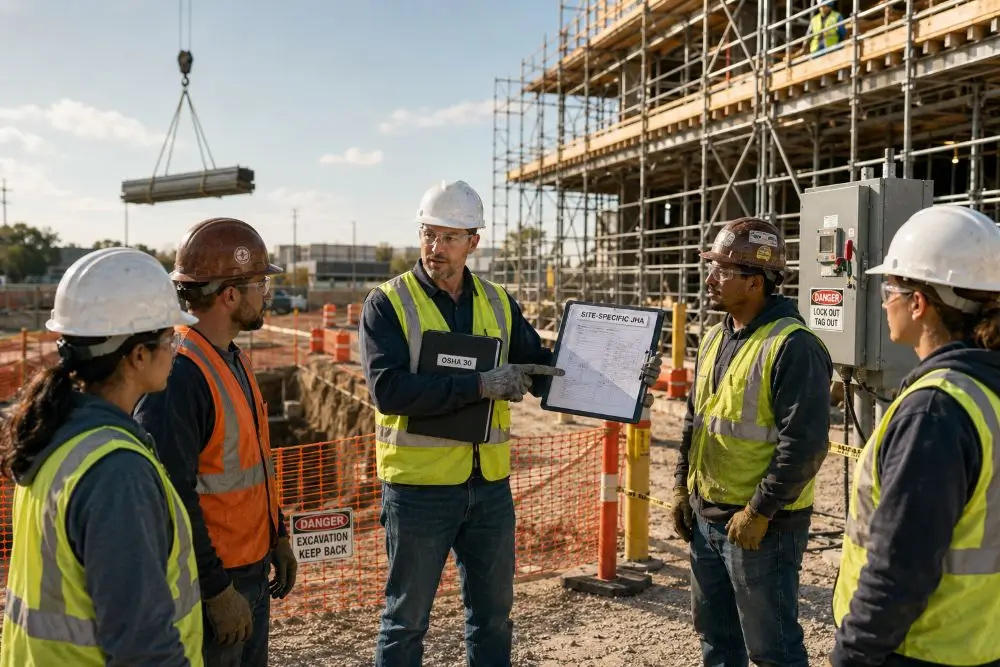
Construction site supervisors are responsible for keeping construction projects organized, safe, and running efficiently. One of their main duties is managing daily site operations, ensuring work is completed according to schedules and project plans. They supervise workers and subcontractors, assign tasks, monitor performance, and help coordinate activities between different teams on-site.
Primary Duties
A major part of the role involves monitoring workplace safety and maintaining OSHA requirements by enforcing safety procedures, conducting inspections, and ensuring workers use proper protective equipment. Site supervisors also schedule tasks, track project progress, and help prevent delays by addressing problems quickly and keeping operations on track.
- Monitor workplace safety and maintain OSHA requirements
- Enforce safety procedures and conduct regular inspections
- Ensure workers use proper protective equipment
- Schedule tasks and track project progress
- Address problems quickly to prevent delays
- Inspect work quality to meet required standards
- Report updates to project managers and clients
- Manage materials, equipment, and site logistics
In addition, construction site supervisors inspect work quality to ensure projects meet required standards and specifications. They regularly report updates to project managers, contractors, and clients regarding progress, safety concerns, and site conditions. Managing materials, equipment, deliveries, and overall site logistics is also essential to maintaining smooth and productive construction operations.
Step-by-Step Guide to Becoming a Construction Site Supervisor
Becoming a construction site supervisor usually requires a combination of hands-on experience, technical knowledge, leadership skills, and safety training. Most supervisors begin in entry-level construction roles and gradually advance through experience and professional development.
Gain Construction Experience
The first step is gaining real-world construction experience through roles such as laborer, helper, or apprentice. These positions help workers understand daily site operations, construction processes, and workplace safety procedures while building practical industry knowledge.
Develop Technical Skills
Construction site supervisors need strong technical skills to manage projects effectively. This includes learning how to read blueprints, understand schedules, plan daily tasks, and work with construction tools, machinery, and equipment used on-site.
Build Leadership Experience
Supervisory roles require leadership and communication abilities. Workers can develop these skills by leading small crews, taking responsibility for tasks, helping coordinate teams, and improving communication with workers, contractors, and managers.
Earn Relevant trainings
trainings can improve job opportunities and demonstrate safety knowledge and professionalism. OSHA training, first aid trainings, and construction safety or supervisory trainings are commonly recommended for workers moving into leadership positions.
Apply for Supervisor Roles
Once workers gain enough experience and qualifications, they can begin applying for construction site supervisor positions. Creating a strong construction resume, networking within the industry, and applying to construction companies or contractors can help increase employment opportunities.
Education and Training Requirements
Becoming a construction site supervisor typically requires a combination of education, hands-on experience, and industry training. Most employers prefer candidates with a high school diploma or equivalent as the basic educational requirement. Many supervisors begin their careers in entry-level construction jobs where they gain practical field experience, learn site operations, and develop knowledge of safety procedures and construction methods.
Some workers also attend trade schools or vocational programs to study construction technology, site management, equipment operation, or related technical skills. In addition, trainings can improve career opportunities and demonstrate professional knowledge. Common trainings include OSHA safety training, first aid and CPR training, equipment operation licenses, and construction management trainings that focus on leadership and workplace safety.
Essential Requirements and Qualifications
- High school diploma or equivalent
- Real-world construction field experience
- OSHA safety training and requirements knowledge
- First aid and CPR training
- Construction safety trainings
- Strong leadership and communication skills
- Blueprint reading ability
- Project planning and scheduling skills
Conclusion
Building a Career as a Construction Site Supervisor
Becoming a construction site supervisor in 2026 is a strong career path for individuals with hands-on experience, leadership ability, and a solid understanding of construction work. The role is essential for ensuring projects are completed safely, efficiently, and on time across residential, commercial, and infrastructure developments.
With the right combination of field experience, technical skills, and safety trainings, workers can move into supervisory positions and build long-term career stability. As construction demand continues to grow, this role offers steady opportunities for advancement and professional growth in the industry.