
Can OSHA 30 Replace Toolbox Talks?
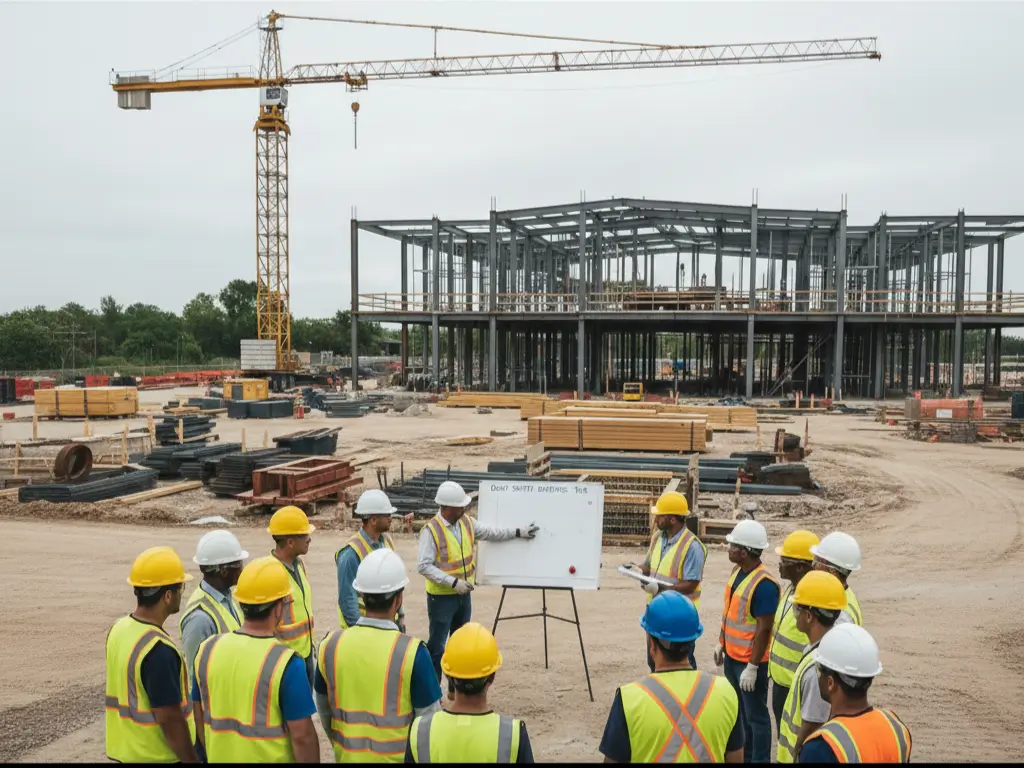
Workplace safety training is a critical requirement in high-risk industries such as construction, manufacturing, and warehousing, where daily hazards can quickly lead to serious injuries. To meet OSHA expectations, employers often rely on structured programs like OSHA 30 training and ongoing safety discussions, such as toolbox talks. However, many employers and safety managers question whether completing OSHA 30 is enough or if toolbox talks are still necessary. This confusion can lead to compliance gaps and increased risk on the jobsite. This blog compares OSHA 30 training and toolbox talks, explains their distinct purposes, and clarifies whether one can truly replace the other under OSHA guidelines. So, read on! What Is OSHA 30 Training? OSHA 30 is an in-depth Outreach Training Program authorized by OSHA and delivered through approved training providers. It is designed to give workers a comprehensive understanding of workplace safety, health hazards, and OSHA regulations rather than job-specific task instruction. The training emphasizes hazard recognition, prevention, and workers’ rights and employer responsibilities under OSHA standards. OSHA 30 is primarily intended for supervisors, foremen, site managers, and safety coordinators who are responsible for overseeing others and enforcing safety practices on the job. It is widely required in construction and general industry, and in some jurisdictions, such as New York City, under Local Law 196, it is mandatory for supervisory roles. Importantly, OSHA 30 is typically a one-time certification that provides a strong safety foundation, but it does not replace the need for ongoing, task-specific safety communication as workplace conditions and hazards change. What Are Toolbox Talks? Toolbox talks, also known as tailgate meetings or safety huddles, are short, informal safety discussions held at the job site. They focus on immediate, task-specific hazards and are designed to address the work being performed that day or week. Unlike formal training programs, toolbox talks are practical and conversational, encouraging worker participation and real-time hazard awareness. Typically lasting 5–15 minutes, toolbox talks are conducted daily or weekly, depending on the risk level of the job. Common topics include site-specific hazards, recent near-misses or incidents, weather-related risks, equipment use, and changes in work conditions. Their primary role is to reinforce safe behaviors on an ongoing basis, keeping safety top of mind and adapting quickly to evolving workplace risks. Key Differences Between OSHA 30 and Toolbox Talks While both OSHA 30 training and toolbox talks play important roles in workplace safety, they serve very different purposes and are not interchangeable. OSHA 30 provides a broad, standardized foundation of safety knowledge, whereas toolbox talks focus on reinforcing day-to-day safety awareness tied to specific tasks and jobsite conditions. Understanding these differences helps employers design a compliant and effective safety training program. Purpose & Scope OSHA 30 is designed to deliver in-depth, standardized training on OSHA regulations, hazard recognition, and safety responsibilities across an entire industry. It builds a strong safety foundation, especially for supervisors and safety leads. Toolbox talks, on the other hand, are short, targeted discussions focused on immediate job hazards, recent incidents, or upcoming tasks, making them highly situational and practical. Training Format OSHA 30 follows a structured curriculum delivered through authorized providers, often online or in-person, with assessments to verify understanding. It is formal and comprehensive in nature. Toolbox talks are informal, conversational sessions led by supervisors or safety managers, encouraging worker participation and real-time discussion of site conditions. Frequency & Timing OSHA 30 is typically completed once or infrequently and serves as a long-term credential rather than ongoing instruction. Toolbox talks are continuous, held weekly, daily, or before high-risk tasks, ensuring safety remains top-of-mind throughout the project lifecycle. Documentation & Compliance OSHA 30 provides a Department of Labor (DOL) card as official proof of training completion, often required by job sites or local regulations. Toolbox talks rely on employer-maintained documentation, such as sign-in sheets and meeting records, to demonstrate ongoing safety communication and compliance. Can OSHA 30 Replace Toolbox Talks? The short answer is no, OSHA 30 training cannot fully replace toolbox talks. While OSHA 30 provides in-depth, standardized safety education and helps workers understand OSHA regulations and common hazards, it is designed as a one-time or infrequent training, not a daily or weekly safety communication tool. OSHA expects employers to maintain ongoing hazard communication, especially for site-specific, task-specific, and changing work conditions. Toolbox talks fill this gap by addressing real-time risks, recent incidents, and daily job hazards that OSHA 30 cannot cover in advance. In practice, OSHA 30 builds a strong safety foundation, but toolbox talks are essential for reinforcing safe behaviors and meeting OSHA’s emphasis on continuous workplace safety communication. Why Toolbox Talks Are Still Required Even with OSHA 30 Even when workers have completed OSHA 30 training, toolbox talks remain essential because job conditions change constantly. New tasks, equipment, weather conditions, and site layouts can introduce fresh hazards that were not covered during formal training. OSHA standards such as Hazard Communication, Fall Protection, and PPE explicitly require ongoing safety communication, not one-time instruction. Toolbox talks provide a practical way to address real-time risks, reinforce safe behaviors, and prevent incidents before they occur on the jobsite. How OSHA 30 and Toolbox Talks Work Best Together OSHA 30 provides workers, supervisors, and safety leads with a strong foundation in OSHA standards, hazard recognition, and employer-employee responsibilities. It equips teams with the why behind safety rules and the regulatory framework that governs workplace safety. However, this knowledge is broad and standardized, designed to apply across industries rather than to daily job-site conditions. Toolbox talks bridge that gap by translating OSHA 30 concepts into real-time, job-specific actions. For example, fall protection principles learned in OSHA 30 can be reinforced through toolbox talks that address the day’s work at heights, ladder placement, or scaffold inspections. Similarly, hazard communication training from OSHA 30 can be paired with toolbox talks reviewing new chemicals, updated SDSs, or recent near-miss incidents. This ongoing reinforcement helps workers apply what they’ve learned in a practical, immediate way. When combined, OSHA 30 establishes baseline competency while toolbox talks keep safety top
Answering Your Top Questions About OSHA 30 Construction
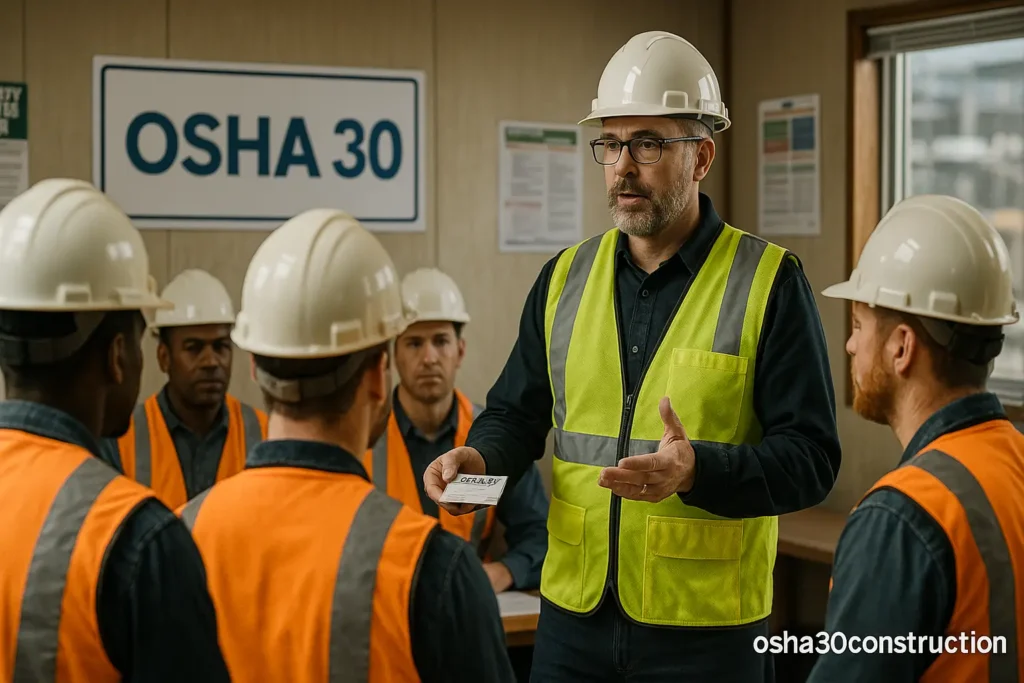
The OSHA 30-Hour Construction Outreach Training is one of the most recognized safety programs in the U.S. construction industry. It helps workers and supervisors understand workplace hazards, prevent injuries, and comply with federal safety standards. Whether you are new to the field or managing crews, this training builds essential safety awareness and credibility. Each lesson is designed to guide organizations in building a safer working environment while teaching employees about safety protocols. It gives hard skills and an in-depth understanding of all possible hazards at a worksite. Below, you can find answers to some of the most common questions about the OSHA 30 Construction program, from requirements and coverage to certification and card replacement. Read on! Question 1: What is OSHA 30-Hour Outreach Training? The OSHA 30-Hour Construction Outreach Training is a comprehensive safety course designed for supervisors, site leads, and safety managers in the construction industry. It covers federal OSHA standards, hazard prevention, workers’ rights, and employer responsibilities. The goal is to reduce jobsite accidents and promote a culture of safety awareness. Training can be completed online from anywhere in the world, and participants receive an official Department of Labor (DOL) card upon completion. The course stretches to 30 hours of training sessions that are easily downloadable. You can also get access to learning resources and sample assessments. Question 2: Is OSHA 30-Hour Construction Training Required by Law? While OSHA doesn’t federally require all workers to take the OSHA 30 course, many states, cities, and employers do. For instance, New York City and Nevada mandate OSHA 10 or 30-hour completion for construction workers and supervisors. Even where it’s not legally required, most contractors and companies make it a condition for employment or site access. Completing OSHA 30 ensures compliance with safety expectations and helps workers meet local or industry-specific requirements. It keeps workers safe from hazards and organizations from getting sued and penalised in case of any mishap. Question 3: How Do I Get a Replacement for a Lost OSHA Card? If you lose your OSHA 30 card, you can request a replacement through the OSHA-authorized training provider that issued it. The provider will verify your course completion and order a new card from the Department of Labor (DOL). OSHA itself does not directly reissue cards, so contacting your original trainer is essential. If you completed the course online, log in to your provider’s portal for support or documentation while waiting for the new card. Question 4: What Happens if I Fail a Quiz or the Final Exam? Failing a quiz or final exam during OSHA 30 training doesn’t automatically disqualify you. Most authorized providers allow multiple attempts to retake quizzes or the final test until you pass. If you repeatedly fail, you may need to restart the course or contact the provider for guidance. The intent of OSHA outreach training is to ensure learning, not penalize failure; the emphasis is on mastering safety knowledge before you earn your card. Question 5: Does the OSHA Card Act as a License or Certification? No, the OSHA 30 card is not a license or official certification. It’s proof of training that shows you have completed OSHA-authorized coursework through a verified provider. OSHA does not license or certify individuals; it only approves outreach programs that deliver safety education. Still, the OSHA 30 card is widely recognized by employers and regulators as a trusted credential showing your understanding of workplace safety standards. Question 6: Is This Program OSHA-Approved? Yes, the OSHA 30 Construction Outreach Training is OSHA-approved, but not directly run by OSHA. It’s delivered through OSHA-authorized trainers who follow strict federal guidelines. Only training providers authorized by OSHA or its official partners can issue valid cards. Always confirm a provider’s authorization before enrolling to ensure your course completion will be officially recognized. You can check their reviews or their credibility in the search engine. Question 7: What Does OSHA 30 Construction Cover? The OSHA 30-Hour Construction course provides comprehensive training on key safety and health topics relevant to construction environments. It includes in-depth modules on fall protection, ladder and scaffold safety, electrical hazards, excavation and trenching, PPE usage, and hazard communication. The program also focuses on recognizing unsafe conditions, understanding workers’ rights, and effectively reporting hazards. Unlike the 10-hour course, OSHA 30 goes beyond basic awareness, emphasizing hazard prevention strategies, recordkeeping, and leadership responsibilities. This prepares supervisors and experienced workers to identify risks early and maintain OSHA-compliant job sites with confidence and accountability. Question 8: Does OSHA 40 Cover OSHA 30? No, the OSHA 40-hour training typically refers to HAZWOPER (Hazardous Waste Operations and Emergency Response) training, a separate program focused on hazardous material handling and emergency response. It does not replace or include OSHA 30. Workers in construction or environmental cleanup may need both, depending on job duties. OSHA 30 addresses general construction safety, while OSHA 40 is designed for hazardous waste operations and remediation work. Wrap Up In conclusion, the OSHA 30-Hour Construction training is one of the most valuable steps toward building a safe and compliant work environment. While it’s not a legal requirement everywhere, it plays a crucial role in helping supervisors and workers recognize, avoid, and prevent workplace hazards. Beyond meeting job or local requirements, it shows your commitment to safety leadership and professional growth. Earning this credential strengthens both individual confidence and workplace safety culture, making it a worthwhile investment for anyone in the construction field.